

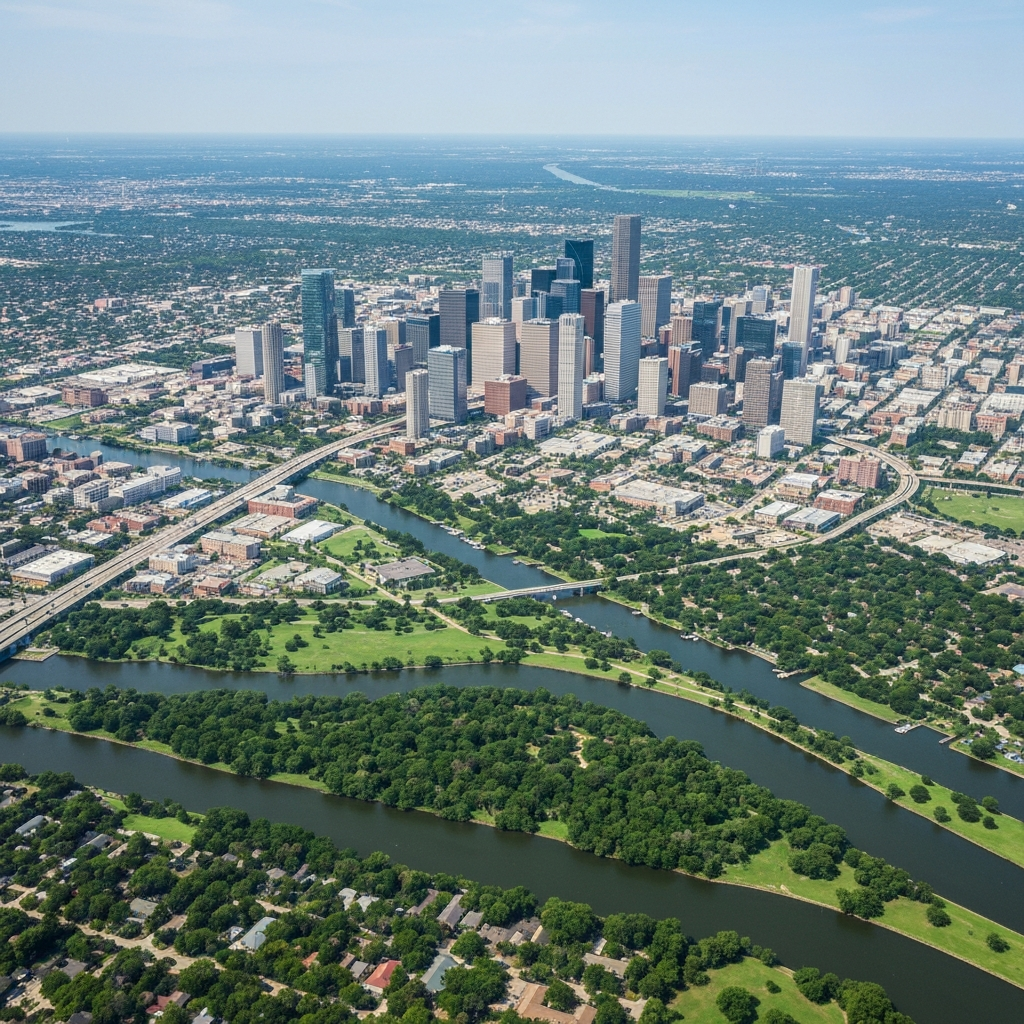
Houston, known for its dynamic growth and resilience, faces significant challenges due to climate change. The city’s unique geographical location and rapid urbanization contribute to its vulnerability to various environmental hazards.
Rising Temperatures and Heat Waves
Recent data indicates a notable increase in the frequency and intensity of heat waves in Houston. In 2025, the city experienced 259 days with temperatures at or above 80°F, marking a record high. Such prolonged heat periods strain infrastructure, leading to issues like road buckling and increased energy demands for cooling systems.
Intensified Rainstorms and Flooding
Houston has witnessed more intense rainstorms, resulting in catastrophic flooding events. Heavier rainfall not only causes immediate damage but also leads to costly repairs and higher flood insurance rates for residents. The city’s flat topography and extensive bayou system further complicate flood management efforts.
Sea-Level Rise and Coastal Erosion
Research indicates that sea levels along the Texas coast have risen by approximately 18 inches over the past 70 years. This rise contributes to more frequent coastal flooding, beach erosion, and the transformation of wetlands into dry land, impacting both wildlife habitats and properties near coastal areas.
Community-Led Conservation Efforts
In response to these challenges, various organizations in Houston are actively working to protect and restore natural habitats. The Coastal Prairie Conservancy has conserved over 34,000 acres of coastal prairie, aiming to preserve these vital ecosystems for future generations. Similarly, Houston Audubon has established the Peach Creek Woods Nature Sanctuary, a 128-acre protected area in Montgomery County, providing essential habitat for migratory and resident bird species.
Urban Initiatives and Policy Measures
The City of Houston has implemented ordinances to safeguard natural habitats within urban parks. A significant ordinance approved by the City Council protects 7,423 acres of forests, prairies, and wetlands across 26 parks, marking a substantial step in land preservation efforts. Additionally, organizations like Houston Wilderness collaborate with business, non-profit, and government entities to promote and enhance the region’s diverse ecoregions through environmental policy initiatives.
Understanding the multifaceted impacts of climate change on Houston is crucial for developing effective mitigation and adaptation strategies. Through community engagement and proactive conservation efforts, Houston continues to strive towards a sustainable and resilient future.